
The Calendar
The Grand Hotels are not merely kept. They are inhabited — by music, by art, by argument, by ceremony, and by the returning seasons of the House.
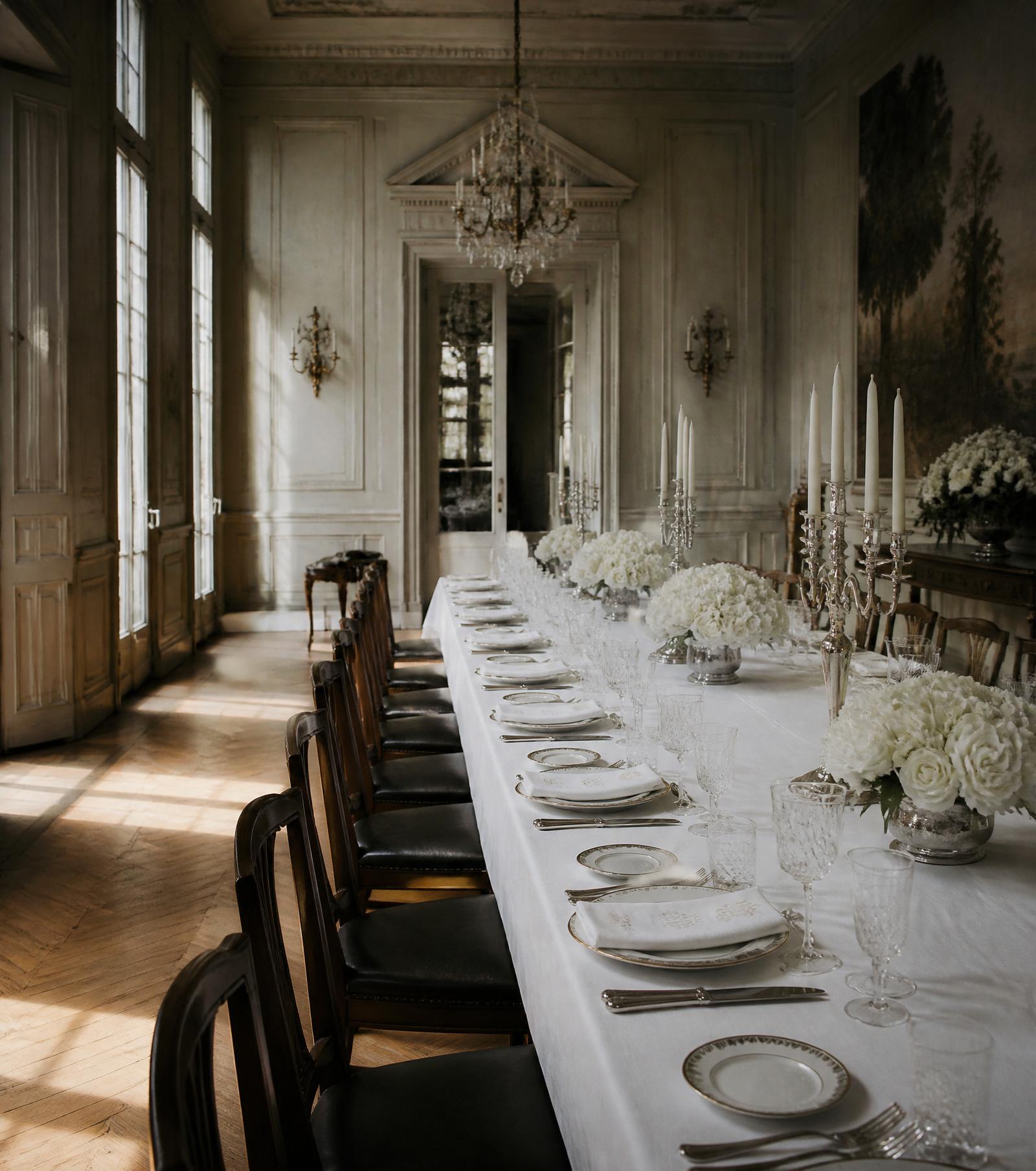
A House is a Cultural Institution.
The great hotels have always served civilisation not only as rooms of residence, but as rooms of culture. Operas were commissioned for them; symphonies were first heard in them; canvases were unveiled in them; manuscripts were argued over in them; and the great charities of the age were launched at their tables.
Connoisseur Grand Hotels continues that office. The Calendar is not a programme of entertainment. It is the record of what the Houses will hold in the coming year — and of whom they will hold it for.
What the Houses Will Hold.
A private performance, given by candlelight in the former imperial salon, for guests of the House and their invited correspondents.
A new commission, rehearsed in the library and given its first hearing before an audience of forty.
Selected works from one private collection, shown to another, beneath the chandeliers of the Salon des Miroirs.
A gathering of correspondents and the editors who preserve them, held around the long table after the library has closed.
An annual subscription for the orphanage of the port. The subscription is closed; the ball is not advertised.
The Returning Seasons.
The great houses are measured by the calendar they keep. These are the four occasions by which the year is known within the Five Houses.
Held on the last Saturday before the holiday, for those who have made the House their second address.
The night the salons are aired, the silver is re-examined, and the first correspondents of the year are received.
A single evening in the garden, timed to the moon, with music carried across the water.
A long table in the Grand Salon, for the families who have returned each autumn for three generations.
The Calendar is issued by the Bureau each autumn, and distributed only to those in correspondence with the House. To receive it, one must first write.
All enquiries regarding the Calendar — attendance, patronage, or the commissioning of a new occasion — are addressed to the Bureau, in writing.